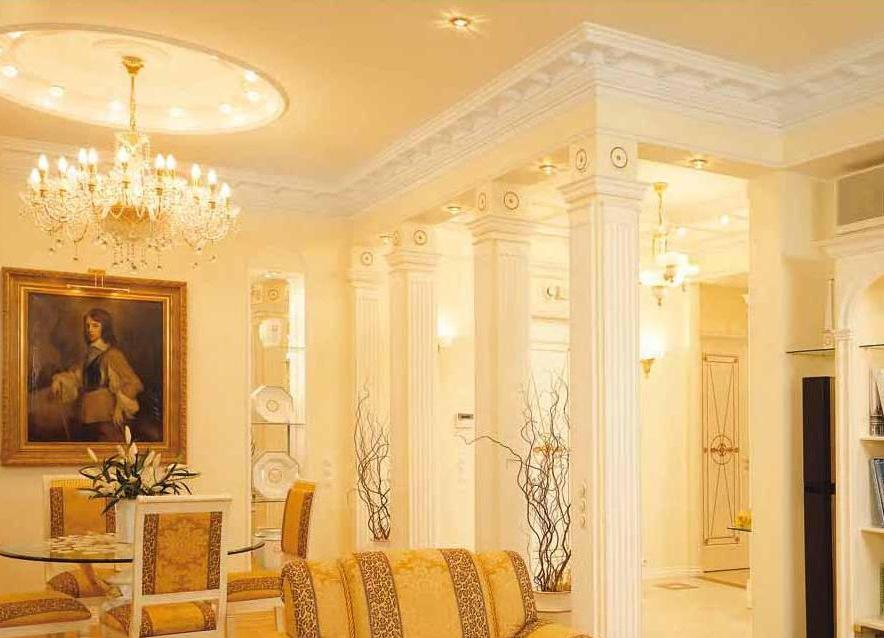
Ceiling moldings are decorative trims that are used for a variety of purposes. With the help of molding or, as it is also called, ceiling plinth, various color schemes of walls and ceilings are combined. Its use allows you to make the surfaces of walls and ceilings more expressive. And the stretch ceiling molding will help to mask the technological gap after installation is completed.

|

|
Ceiling plinths are made of gypsum, wood, polymer materials: polyurethane and polystyrene.
Decorating the ceiling with moldings made of gypsum mixture is very beneficial due to the durability of the material. If any defects appear on the surface, you can easily and without any special investment repair them with plaster.
Ceiling molding made of foam plastic (polystyrene) differs from other materials in that it is incompatible with solvents. Therefore, it is preferable to paint polystyrene foam with water-based paint. Flexible polystyrene moldings are preferred when it is necessary to design a surface of irregular geometric shape.
Ceiling plastic molding (polyurethane) does not fade, does not deform and is resistant to moisture and temperature changes. Therefore, plastic is preferred when decorating kitchens and bathrooms.
How to glue molding to the ceiling?
Ceiling plinths made of polymers, foam plastic or gypsum can be glued using liquid nails, special mastic or construction acrylic. When purchasing liquid nails, you need to pay attention to the acetone content in the substance. This solvent may corrode some types of molding.
Wooden skirting boards are much heavier than all others, so they are secured with nails. The surface on which wooden moldings are installed must be perfectly flat.
Ceiling moldings in the interior
Ceiling moldings are an indispensable decorative element of interior design. With their help, you can stylize the room in any architectural manner. Finishing the ceiling with moldings draws attention to the surface, making it spectacular and unusual.
The design of the ceiling with moldings, in harmony with the overall interior of the room, gives the room an interesting and finished look. A wide plinth around the perimeter of the room combines well with the classic style. And dividing the ceiling into squares using moldings emphasizes the interior, decorated in English or Gothic styles.

|

|

|

|

|

|

|

|

|