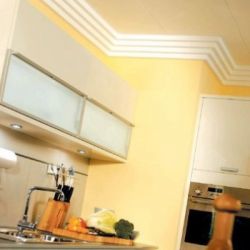
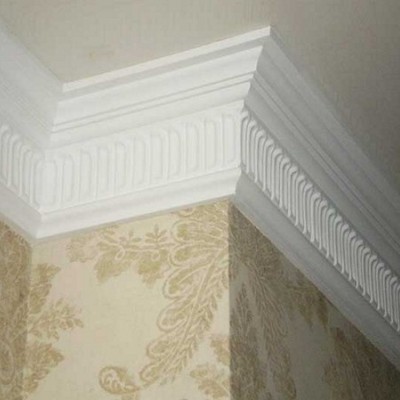
Ceiling plinth under a suspended ceiling is a finishing method that gives the room a complete look. This solution allows you to hide some surface irregularities and minor defects. The range of skirting boards for ceilings (their other name is fillets) is varied. They can be painted or a specific color that will harmonize well with the overall appearance of the room.
Polyurethane skirting boards for the ceiling
These products are gaining increasing popularity due to a number of their advantages:
- have flexibility, which allows you to expand the design possibilities of rooms;
- they are easy to care for;
- fade slowly and are quite durable;
- have an affordable price;
- tolerate temperature fluctuations well.
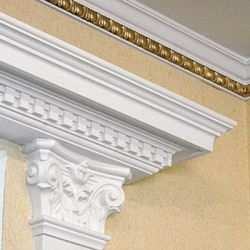
Foam skirting boards for the ceiling
This is another common type of fillet. It is worth noting their advantages:
- low cost;
- wide choice;
- easy to install;
- light weight.
But foam baseboards are fragile and lack flexibility, which limits design options.

Plastic skirting boards for the ceiling
Such products will be an excellent solution for the bathroom, toilet, and kitchen. After all, in these rooms the ceilings are also often made of plastic. In the bedroom or living room, finishing made from a different material will look better.
Plastic is easy to care for and can be easily washed with detergent. Therefore, he will not be afraid of traces of fat, which are inevitable during cooking in the kitchen, because they can be easily removed without damaging the appearance of the fillet. Low price, as well as ease of installation, are the undeniable advantages of plastic products.
The choice of fillets is an important stage of repair. Thanks to their installation in the room, you can create a feeling of comfort and homely atmosphere.