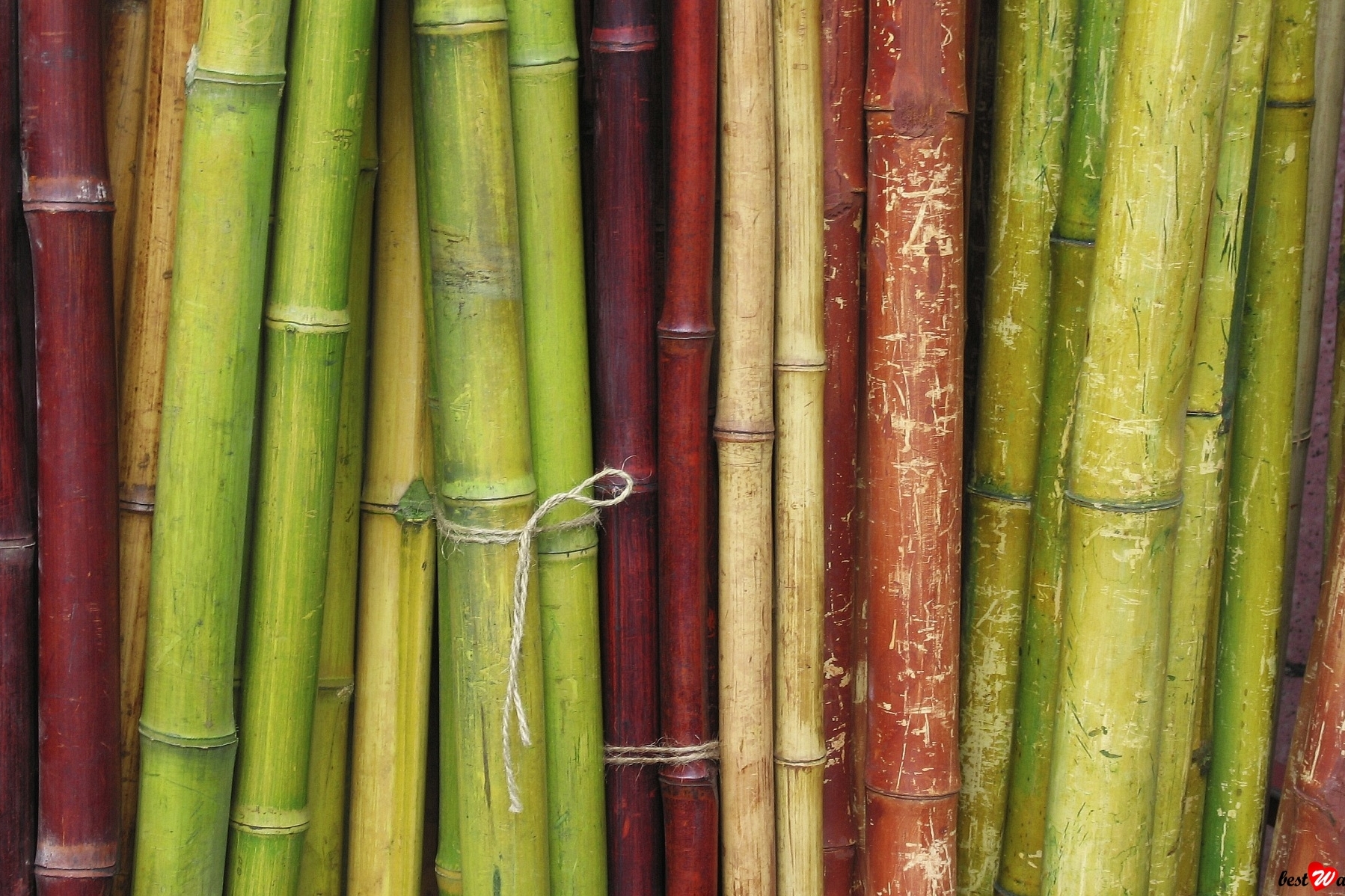
Bamboo can be classified as a universal interior material. It fits harmoniously into a variety of design trends: from variations of eco-themes and ethnic to high-tech styles, such as hi-tech. Bamboo in the interior creates a warm, natural atmosphere that promotes relaxation, allows you to relax and move away from the daily hustle and bustle.
In the cultures of Japan, China, and Southeast Asia, bamboo is a traditional material – and in our latitudes it spread precisely due to interest in the “deep East” (as opposed to the Near East and various variations on the theme of 1001 nights). Today, exoticism has become a sought-after and popular trend that can be played out countless times.
The main advantages of the material are environmental friendliness, laconicism of its texture, graphic form, variety of colors within a neutral palette: from brown to ocher, olive and green. In addition, bamboo is durable and easy to work with.
Important! When placing bamboo elements in the interior, remove them as far as possible from the heat source, otherwise the material will delaminate and crack.
Bamboo design
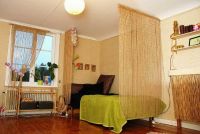
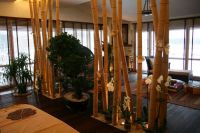
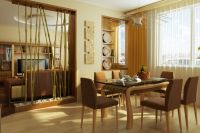
1. Decorating with bamboo can be used for zoning a room, making partitions, screens, columns that will divide a large room into parts. This is especially true for studio apartments, living rooms combined with a kitchen, kitchen-dining rooms.
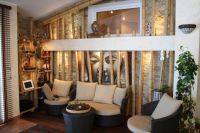
2. Decorating walls with bamboo is popular; whole trunks and chipped strips are used for this. You can make decorative panels and frames from bamboo, which will focus attention on one or another element of the interior, for example, a wall panel.
3. Bamboo wallpaper in the interior is also a common design solution that allows you to dilute the coldness of minimalism and hi-tech. They are made from thin strips of split bamboo and treated in such a way as to extend their service life. Bamboo wallpaper is more neutral than plant trunks or parts thereof – and, accordingly, more “friendly” to other materials, for example, metal or plastic.
Bamboo can be used to make decorative beams on the ceiling, thereby creating an imitation of a bungalow. This solution is perfect for interiors in oriental, tropical, and colonial styles.
By the way: When using bamboo in the interior, combine it with burlap, canvas, and other textured fabrics, connect the trunks with coarse jute threads or ropes – this way you will create a very characteristic and colorful design.
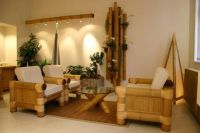
4. Bamboo furniture looks good – beds, tables, chairs, shelves and racks. Using bamboo (especially thin strips of chips, which can be bought at many hardware stores), among other things, you can update old furniture.
5. Bamboo can also be used to decorate a window or doorway (especially if, when creating the interior, the owners decided to abandon doors). Bamboo can also be used to make handrails for stairs in homes.
6. Interior little things made from bamboo are very interesting and beautiful: vases, decorations, frames for mirrors and pictures, dishes, fountains, souvenirs, such as, for example, “sounds of the wind.”
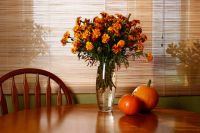
7. Another popular option for using the material is bamboo blinds, which pleasantly diffuse light and create a warm, cozy atmosphere in the room.
Bamboo will look impressive in the interior of the kitchen – as wall decor; bamboo furniture is also suitable for the kitchen. But the best solution is to make a bar counter or something similar from bamboo. It will especially appeal to romantics who dream of a serene vacation on the ocean or wild tropical adventures.

|
|
|
|
|
|
|

|
|