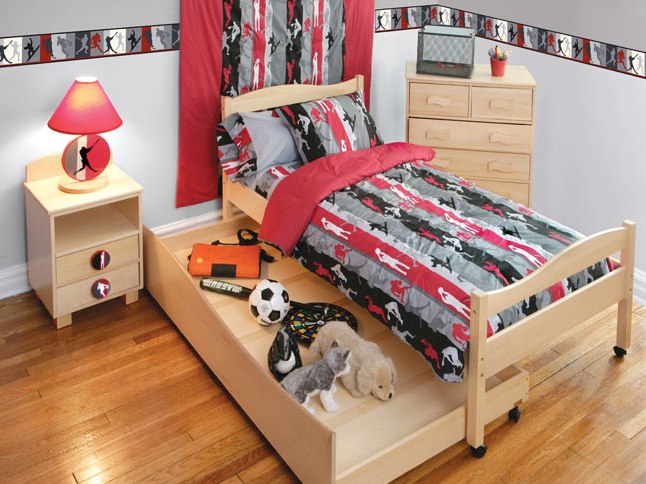
By using these decorative elements, we transform our premises, making the interior brighter and more attractive. Some people consider them to be out of fashion, but this is absolutely not true. They can correctly highlight a separate area, combine individual elements or adjust the space. But you need to take into account some nuances when choosing this decoration.
Types of wallpaper borders
- They differ in their width. It can be several centimeters, or maybe about a meter. The standard roll length is 5-10 meters.
- These products differ in their color and applied pattern, although there are borders without a pattern at all (plain color).
- Depending on the application of the adhesive. There are self-adhesive wallpaper borders. It is applied at the factory and protected with a special film. In another version, the glue is also already applied, but it must be moistened with water before gluing. On others you need to apply the glue yourself. A simple adhesive for vinyl wallpaper or one marked “For borders” is suitable for this.
- Smooth borders or embossed.
- Simple or coated with a special composition: a simple pattern, a holographic design, coated with paint with a light accumulator (they have the property of glowing in the dark), covered with “gold”, lace. Decorative borders for wallpaper can be used in a variety of architectural styles.
- According to the theme of your drawing. It is better to choose one with vegetables or fruits for the kitchen, and the children’s wallpaper border differs from others with images of cartoon series characters. It is better to choose products with plant elements or geometric shapes for your living room.
- Scope of application of these decorations. It can be very different. The border can be found in the bathroom and kitchen. Some designers cover furniture with them. The main thing is that they match the wallpaper and match the overall architectural style.
- Material from which they are made:
- paper borders for wallpaper – they are the cheapest, they are easy to glue and remove, but such material is not washable at all and is short-lived;
- vinyl borders for wallpaper are a relatively inexpensive and high-quality material, they are easy to clean from dirt and glue, such decorative elements are durable;
- acrylic borders – according to their data, these products are almost identical to vinyl ones; they differ in that during the manufacture of such decorative strips an acrylic emulsion is applied to the surface.
How are wallpaper borders used?
Paste them directly onto the wallpaper, waiting only for them to dry thoroughly. Often the wall needs to be divided into two parts. The top is painted in light colors, and the bottom is painted in darker colors. This is necessary because the bottom is more often subject to contamination and replacement. It is the border that serves to visually divide the wall into these parts. Also, these decorative elements can give a complete look to your room. You can use them to both narrow and expand the space in it. Curbs are placed not only in one row, but also in parallel at some distance. You can try combining them with different widths and types of patterns.
These products can easily be used to decorate doorways, windows, and create the illusion of panels on the walls. You can often find vertical wallpaper borders. This type of pasting is used for various purposes: they have long been used to decorate and highlight corners, to hide various errors on the walls, joints on the main wallpaper, to decorate mirrors or furniture. But most often this technique is used to highlight functional areas or a certain section of the wall. They are glued both under the ceiling and near the floor, even in the center of the wall. It all depends on your taste and style of the room. Glued at the top, these decorative strips can effectively highlight your high ceilings. If you use two types of wallpaper on the wall at once, then the transition between them will best be highlighted by beautiful, original wallpaper borders. They are exactly the little thing that is often missing to finish the renovation on a good note, making the final finishing touch.

|

|

|

|

|

|

|

|

|