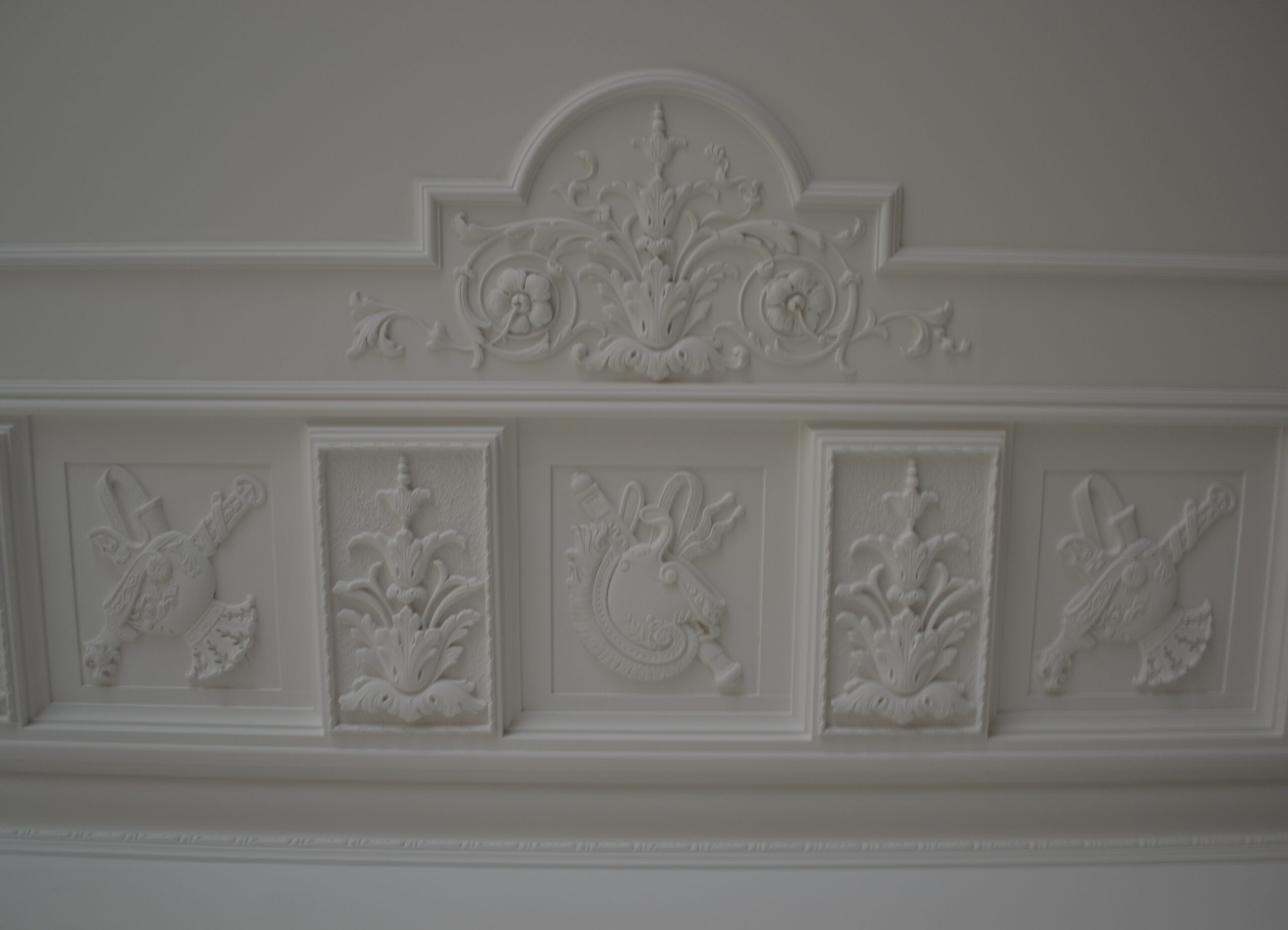
Plastering walls is an integral attribute of a thorough home renovation. Gypsum plaster is an environmentally friendly material that is used primarily for interior decoration. It perfectly absorbs vapor formation and has a “breathing” ability, which provides an excellent room microclimate. Which gypsum plaster is best to choose for walls? To answer this question, here are a few names that were selected as the most frequently used by consumers:
- “Rotgypsum plaster”. It is a dry mortar mixture based on gypsum, which fits very easily on the walls and eliminates all unevenness. Affordable.
- “GIFAS”. Asking the question: “Which gypsum plaster should I choose for my walls?” You can opt for the finishing material “GIFAS”. It is well suited for both manual and machine finishing of walls and ceilings.
- “Rotband” by Knauf. This material is positioned as gypsum plaster, which can be chosen for high-quality hand-finished walls and ceilings with a solid, ordinary base.
- “Plitonite” from “GT”. This gypsum plaster can be chosen for finishing any type of wall with normal humidity levels. The solution has an increased hardening rate.
- “Prospectors”. Plaster used for interior finishing work. Made on a gypsum base with admixtures of products from Bayer (Germany) and Wacker (Germany).
Which plaster is better – lime or gypsum?
In the process of construction or renovation, we are sure to face a dilemma: which plaster is better – lime or gypsum? It is impossible to answer this question unequivocally. Because its decision directly depends on for what purpose and where you will use a particular material. Lime plaster is ideal for exterior façade finishing and finishing of rooms with high humidity and likelihood of mechanical damage (corridors, garages, staircases). It is resistant to external influences, but looks a little rough because it has a rough structure.
Gypsum plaster is excellent for interior wall decoration. It does not require additional processing, is easy to apply and has a smooth structure. However, it is not recommended to use such finishing in rooms with high humidity; a large amount of humidity has a bad effect on it.
If necessary, these two types of finishes can be combined. To do this, a layer of lime plaster is applied, and a thin layer of gypsum is placed on top of it.

|

|

|

|

|

|

|

|

|