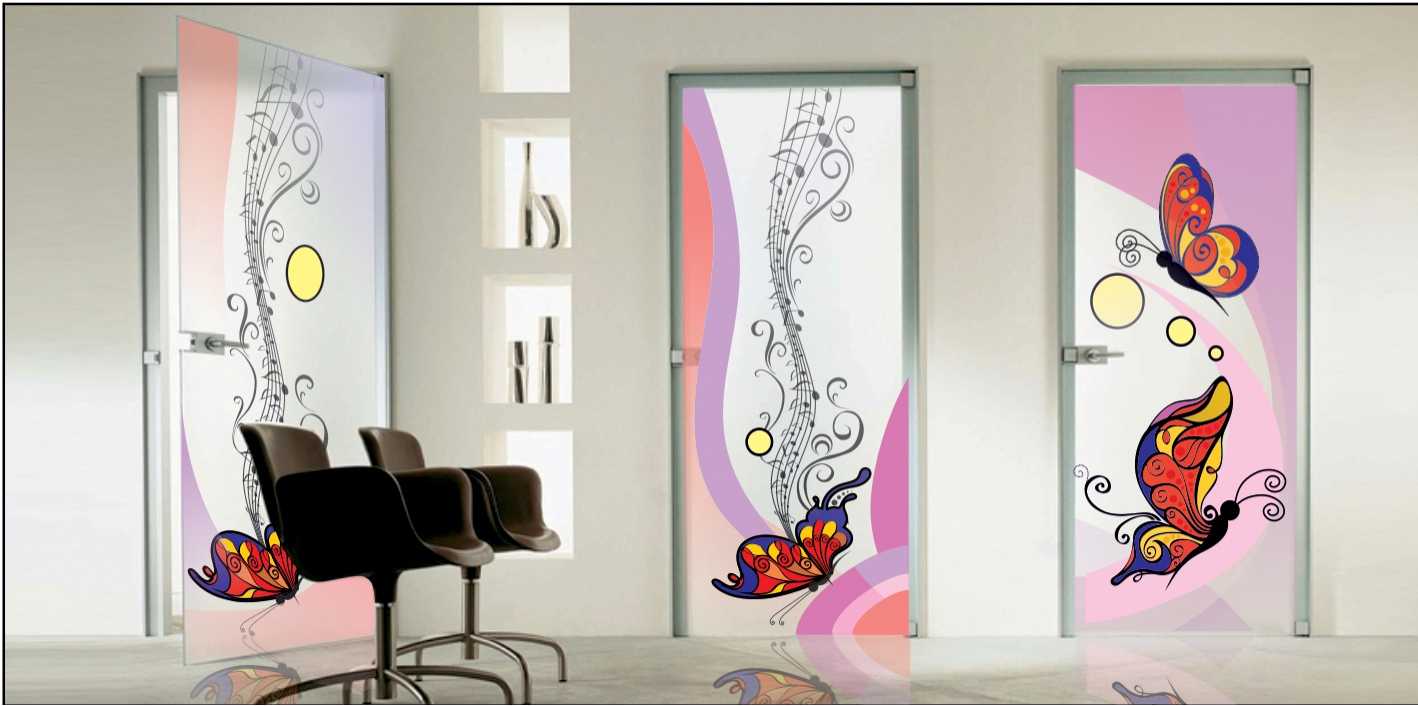
Agree that an unforgettable impression remains from contemplating sunlight, especially if the ray penetrates through stained glass. Modern designers focus their attention on the color schemes of the interior, filling it with a variety of carpets, wallpaper, panels, paintings and lamps. There is another option for solving this issue – stained glass drawings.
Stained glass is a created color composition made on glass. And if previously only the windows and doors of temples or castles of the nobility were decorated with stained glass designs, today they are quite often found in ordinary apartments. These paintings made of multi-colored glass give the room a touch of medieval celebration and grandeur. Designers use stained glass not only to frame window and door openings; now colored panels are also used in interior partitions, shelving, wardrobes and other functional interior elements.
Stained glass drawings in the interior
- Stained glass drawings on the door. Increasingly, interior doors are decorated with colored glass inserts. There is no need to worry about the strength and reliability of such doors; the glass for them is carefully processed and covered with additional protection.
- Stained glass partitions. Recently, this design technique has become very popular. A partition with stained glass patterns looks airy and light, just like any glass wall. The function of such a design is only to divide the space, and not to block it, and the double-sidedness of the stained glass window serves as decoration for both rooms at the same time.
- Ideas for stained glass designs on furniture. Showcases with stained glass in living room sideboards or kitchen facades look very unusual and elegant. The most common elements in interior design are stained glass designs on mirrors in wardrobes, stained glass chandeliers, lamps, etc.
- Stained glass drawings on glass – wall decoration. Stained glass paintings are appropriate in the interiors of corridors, halls, living rooms and dining rooms.
- Drawings with stained glass paints in complex building structures. Niches, ledges and arches are often used to create useful space in an apartment; an unusual option for decorating such structures is the insertion of stained glass windows.
- Stained glass drawings on the ceiling. To decorate the upper part of the room, glass suspended ceilings with patterns are used; they are quite simply attached using metal frames.

|

|

|

|

|

|

|

|

|

|

|

|

|

|

|

|

|

|
Separation of stained glass designs by type of production
- Classic stained glass designs. Transparent glass pieces are fixed with metal profiles and glued together. The metal in this case serves as both the frame and the outline of the lines for the pattern.
- Painted stained glass – This is solid glass painted with transparent paints.
- Film drawings – multi-colored films are glued onto a layer of glass, creating patterns.
- Sandblasting of stained glass are a combination of glass fragments that have been sandblasted.
- Mosaic painting assembled from glass elements of the same size.
- Fusing stained glass – this is pressing foreign fragments into glass, for example, wire, or baking multi-colored glass elements.
Subjects of stained glass drawings
A huge variety of patterns and themes for stained glass will help you choose a harmonious pattern for any interior style. Stained glass drawings on the theme of flowers will look harmonious in the style of art nouveau, avant-garde or neoclassicism.

|

|

|
To decorate niches or any other similar structures, landscapes and stained glass drawings in the form of butterflies are mainly used.

|

|

|
Themed interiors, such as Scottish, English or floral, are usually decorated with stained glass designs depicting large roses, tulips or lilies.

|

|

|
Classic versions of stained glass designs, made in the Tiffany style, fit absolutely into any interior; they often depict cats and birds.

|

|

|
Children’s rooms are one of the most versatile places to use stained glass designs. Fairy-tale characters and cartoon characters are the most suitable themes for decorating playrooms.

|

|

|