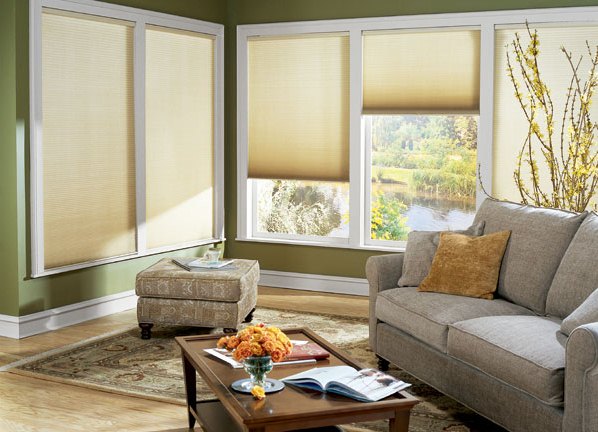
Nowadays it is very easy to renovate or update the design of a room. In this case, the main problem, paradoxically, is the choice of suitable materials. With their modern diversity, it is quite difficult to settle on any one option.
An example of this is the choice of blinds. If previously windows could be closed from the bright sun or prying eyes exclusively with curtains, today you need to choose between them and a wide range of blinds. By the way, among the latter, fabric ones are especially popular. Let’s find out why.
Advantages of fabric curtains and blinds
If plastic blinds are bought because of their practicality and versatility, then the main advantage of their fabric counterparts is their decorative function. So, fabric blinds:
- can be vertical and horizontal, of different colors, with patterns, etc., due to which they allow you to control light fluxes in different ways;
- create a special home comfort in the room;
- softly diffuse light;
- are functional and make it possible to purchase fabric of any size, which is used to decorate non-standard windows;
- impregnated with a special dust-repellent substance;
- do not fade in the sun and protect your furniture, floor coverings, etc. from ultraviolet radiation;
- They are quite easy to care for and do not require ironing.
Fabric blinds are suitable for installation on both plastic and wooden windows.
Types of fabric blinds
Fabric blinds most often mean vertical blinds for windows. They may differ in their design and, of course, design.
- The main difference is, first of all, the fabric of the blinds. Polyester (known to many as thick jacquard) and fiberglass are the most common options. More modern fabric blind systems are also popular, such as “day/night” (consisting of alternating light and dark slats), “dim-out” (translucent fabric that creates pleasant partial shade in the room) and “black-out” (light-proof fabric that can completely darken your room). No less common is the option of pleated fabric (plisse), as well as photo blinds (by analogy with photo wallpaper, when unfolded, the blinds look like a colorful painting).
- Blinds vary in color. Their slats can be plain – this is the most budget option. Textured and structured fabrics look more elegant. They are best used to create accents in a room rather than as a general background.
- Horizontal fabric blinds are often called roller blinds. They are a drum on which a roll of fabric is wound when the blinds are raised. This simple mechanism has proven to be convenient in everyday life, and this “Roman blind” looks beautiful and elegant. If necessary, the fabric can be easily removed and machine washed. One of the subtypes of such a system is cassette roller blinds, which have a protective box or cassette in the upper part.

|

|

|

|

|

|
Features of fabric blinds
Firstly, when choosing them, you should take into account the style of the entire room: the color of the furniture, wall coverings, lighting design and much more. Ideally, this should be done by a professional designer, but if you are doing this yourself, keep a few points in mind.
For example, the choice of blinds should be based on the features of the opening mechanism of the window itself: it is important that it is convenient.
Also focus on the room itself where you are going to hang the blinds. For the kitchen, for example, it is better to buy fabric blinds made of fiberglass, which has water-repellent properties, and for the balcony – vertical fabric blinds made of plain jacquard.

|

|

|