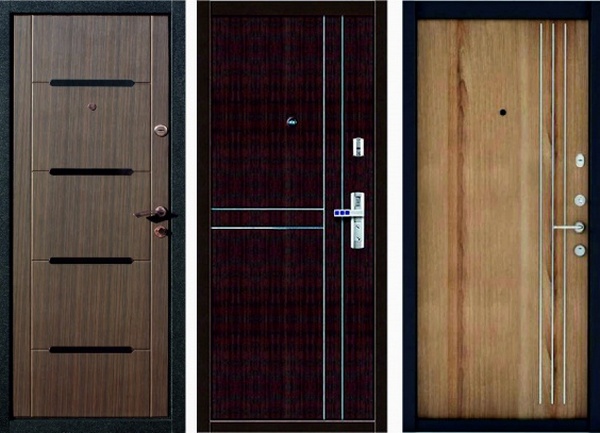
The door with molding today is very popular due to high protective characteristics and simultaneous decorativeness. Metal doors with molding belong to the group of protective metal products. Finishing materials additionally create security qualities.
What is Molding?
Molding is a convex bar used to decorate the door surface. In addition to decoration, it has several more purposes, for example, protection of the door leaf from mechanical damage.
In addition, using molding, you can cover various drawbacks and divide the canvas into separate areas for further processing. The space between horizontal inserts can be patched or freed in order to make the door even more attractive.
Molding can be made from various materials, such as:
- gypsum;
- foam;
- polyurethane;
- metal;
- natural or artificial wood;
- Laminated polymers.
Most often, the wood version of the molding is used for the front doors. To do this, under high pressure, the wood is compressed, additionally fastening the layers of lignin. The result is a compact and fairly strong slab.
Advantages of metal entrance doors with molding:
- Reliability. Molding is the most durable finishing material for the doors.
- Practicality. Doors with such a finish do not need special care, just wipe them from dust, you can use detergents for wood, if you need to clean the door from dirt.
- Universality. MDF and PVC moldings fit into any exterior and interior, they can be primed, painted, varnished, filled, supplemented with glass inserts. A metal door with a wenge color is very attractive.
- Accessibility. The cost of doors with molding is lower than on analogues of wood massif.

|

|

|

|

|

|

|

|

|