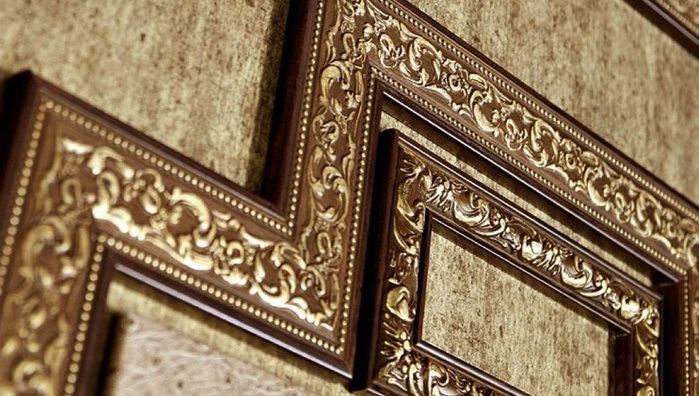
Every time, when making renovations, an amazing picture is drawn in my mind: beautiful rooms, interesting decoration, unusual interior. It doesn’t take much effort or money to make your dreams come true. The modern building materials market can offer a lot of products for unique home decoration. One of the things necessary for this is an interior baguette.
Baguette is used for a smooth transition from walls to ceiling. The solution is not new. A beautifully decorated ceiling has always been valued in aristocratic homes. Fashion is returning and interior molding is still used for a creative appearance of the ceiling in the interior. You can buy it at any hardware store or order it online. It comes in different shapes, thicknesses, colors. Decorative baguette can be used to decorate ceilings, walls, furniture and even decorate niches and mirrors.
Baguettes are made from various materials: polyurethane, plastic, ceramics, gypsum, wood. The most widespread for their practicality are baguettes made of plastic and polyurethane.
Plastic interior baguette
This type of finishing material is relatively inexpensive and has a number of advantages: it does not shrink, does not dry out, is moisture resistant, and durable. They are often sold ready-made to match various natural materials. Using a plastic interior molding instead of a plinth, ceiling cornice and corner slats will create a beautiful decoration of the room. This baguette can be used to decorate furniture. There are a huge number of variations: wood, gold, copper and others. All this allows you to create a unique interior.
Polyurethane baguette
Unlike plastic baguettes, interior polyurethane baguettes tend to bend. Therefore, they are used to work with radius surfaces. If the room has semicircular walls, then polyurethane baguettes will do an excellent job of decorating these surfaces. This feature is due to the fact that polyurethane is created on the basis of rubber. Such products do not absorb odors, are easy to clean, and durable. The shape, width, and colors of this baguette can be very diverse.
The interior baguette is not afraid of temperature changes, it is very wear-resistant.
Installation of interior molding
Before installation, you need to prepare working tools – pencil, knife, assembly glue or liquid nails, putty, sandpaper, baguette.
In order for the interior molding to be installed correctly in the interior, you need to follow simple rules.
- It is necessary to pay close attention to the surface on which the baguette will be glued. It must be cleaned of dust, leveled, and primer applied. Priming is necessary for better adhesion.
- Mark carefully. Especially in rooms that do not have right angles where the walls intersect. To do this, you need to attach a piece of baguette to the wall and draw two stripes on top and bottom. After this, you need to do the same procedure on the joining wall.
- Using the finished markings, cut off the excess parts on the interior baguette. You should not begin installing the molding until all parts have been cut and joined.
- Apply liquid glue using a special gun. Glue the baguette to the ceiling. The glue should be applied carefully, trying not to have too much of it. Liquid nails, in case of excess, can be blotted with a wet sponge.
- Fill the joints and sand with fine-grained sandpaper.
- If necessary, apply paint to the baguette.
Interior baguette is a very convenient and simple way to add aesthetics and aristocracy to any interior. Working with it does not require any special skills, and the result will pleasantly surprise you.

|

|

|

|

|

|

|

|

|