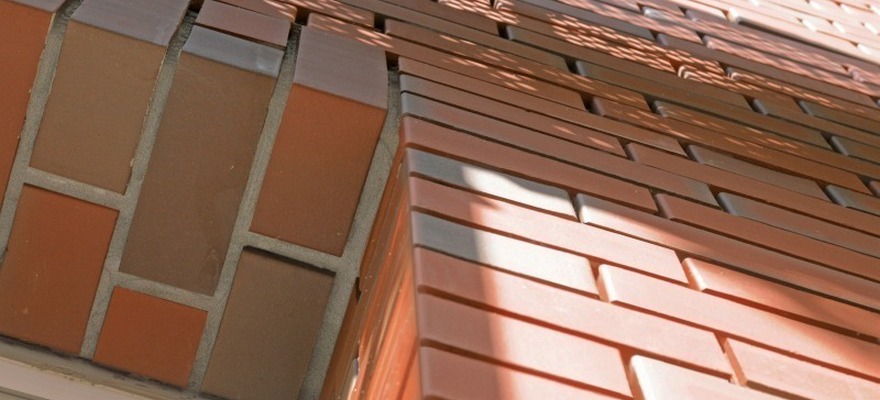
Clinker tiles – excellent facing material with a wide range of use. Its unsurpassed operational characteristics and a wide range of colors and textures make it very common building material in many areas.
Where can you use clinker tiles?
First of all, in the decoration of facades and landscape design. Clinker tiles for brick and stone are especially in demand in this construction area due to the excellent operational characteristics and simplicity of styling. In a fairly short time, you can radically transform the exterior of the house or the local site, using facing and paving clinker tiles.
In addition to decorative properties, the material is characterized by good protective characteristics, protecting the facade of the house from the negative effects of moisture, temperature changes, solar and mechanical exposure.
 |
 |
 |
In landscape design, clinker tiles acts as a material for paving paths, porch, stairs, domestic courtyards, terraces. Porcelain tile has high strength, frost resistance, serves for many years, withstanding mechanical and static loads, moreover, it perfectly decorates and ennobles the territory.
 |
 |
 |
Also, clinker tiles can be used for facing furnaces and fireplaces. Due to the fact that in the process of manufacturing it was treated with high -temperature firing and was formed by the semi -dry method, the tile is able to withstand significant temperature loads.
 |
 |
 |
Advantages of clinker tiles
The demand for the material applicable both inside and outside of buildings is explained by its unique characteristics and high decorativeness.
A wide variety of forms, textures, colors and shades make it possible to embody the most diverse design ideas, and excellent functional qualities allow us to talk about clinker tiles, as one of the leading finishing materials in the construction market.
So, among the positive characteristics of the tiles, the following can be distinguished:
- High strength – in this the material is not inferior to porcelain stoneware and natural stone;
- low water absorption, which ensures resistance to high humidity and temperature changes;
- preservation of an attractive appearance for a long time;
- resistance to chemicals – alkalis and acids;
- creation of additional wall protection from the destructive effects of the environment;
- long life without damage and decorative loss;
- Environmental safety, because natural raw materials are raw materials.
Features of clinker tiles
The difference between clinker tiles and ceramic ones is in raw materials and firing temperatures. So, for the manufacture of clinker, shale and peat clay are used. At a firing temperature of 1300 ° C, they sof into material, simultaneously similar to ceramics and natural stone. In addition, the firing time is not 2 hours, as in the case of ceramics, but as many as 36 hours.
Knowing such features of production, one can confidently assume that the clinker tile is much more reliable than ceramic. There is another interesting feature-clinker tiles “ripen” for another 40-50 years, that is, molecules are in the stage of strengthening and stabilization. And this lengthens the operation of tiles for half a century. Pretty attractive from the point of view of the buyer, because the facade or path is guaranteed to last you throughout these years.