
Plants have long been fixed in interiors and are not going to take up positions. There are many enthusiasts in the design world who come up with new solutions with herbs. One of these modern trends is vertical landscaping. In the article, we consider what vertical landscaping is, how to make a wall of plants, how to integrate vertical landscaping into the apartment.
Content:
- What is vertical landscaping?
- Live wall from plants
- Types of vertical landscaping
- How to integrate vertical landscaping into the apartment
What is vertical landscaping?
Vertical landscaping is a design consisting of support and green plants on it. This method allows you to place a large number of plants on a small area. Unlike flowers in pots, such a layout is convenient in care and takes less space.
The vertical wall allows you to create a unique composition where the plants are different in volume and color.
Vertical landscaping is used to decorate the interior, add a particle of nature to it, create a certain microclimate in space. This solution allows you to create a living corner in an apartment where you can relax and relax. The green wall will definitely make housing unique and surprise even the most sophisticated guests.
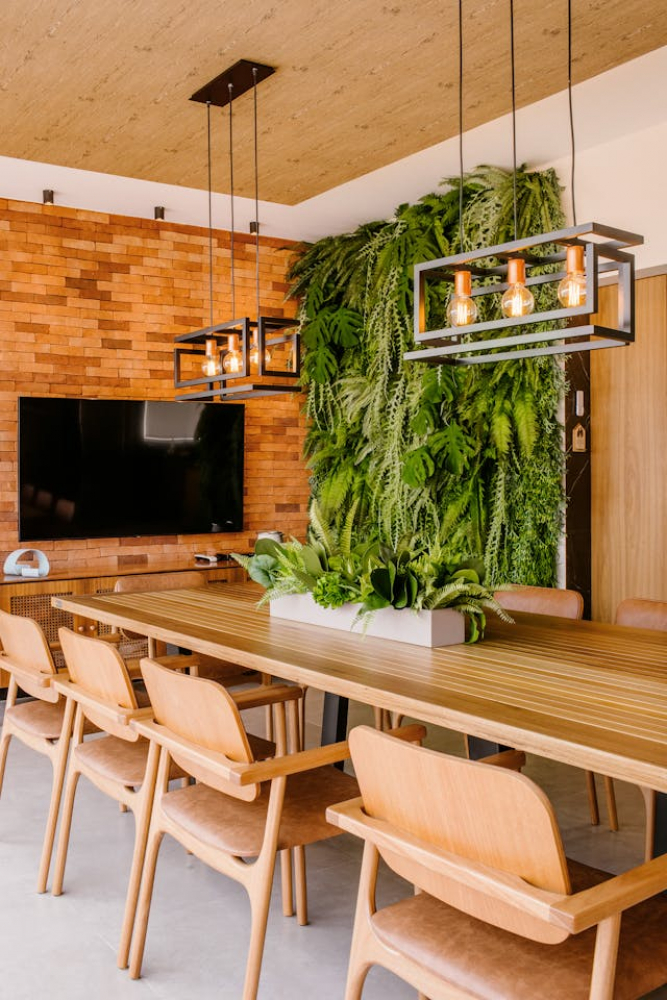
Photo: a living wall makes the interior of space unique
Live wall from plants
Green walls can consist of both living and artificial plants.
The live walls are based on decorative evergreen plants. Most often, they use an option with weakly flowering plants, since the flowers quickly fade and leave the petals behind. In addition, they attract insects.
A living wall can be made of pack, ampel and vine plants. For example, ivy, ferns, tradescants.
Vertical landscaping can be automatic or manual watering. Automatic watering is used in volumetric and expensive compositions. There, the living wall is connected to the water supply, and automation waters plants with a certain frequency.
Such a phytomodule does not require care at all. Greens grow on its own if the green wall has access to the water supply and electricity. You can go on vacation for several weeks and leave the plants unattended and they will not dry. The cost of such a design with automatic watering starts from 10 thousand rubles.
A living wall with manual watering has no electronics and is completely autonomous, it does not depend on the water supply or electricity, it is cheaper. Such vertical landscaping must be watered independently. If you forget to do it or, for example, leave unattended, the greens will dry.
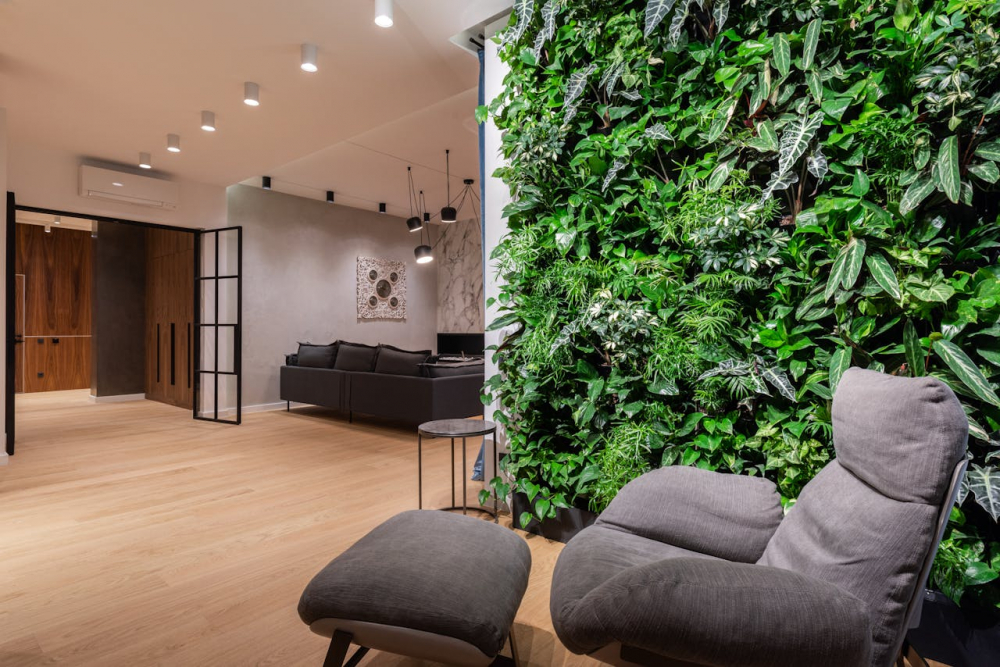
Photo: In a room environment, plants need to be watered at least once every 2 days
An alternative to a living wall is an artificial green wall. In it, plants are usually made of hypoallergenic silicone or plastic. Copies are so high quality that sometimes it is difficult to distinguish from the living. Such vertical landscaping does not create a special microclimate, has no smell and does not require care. At a price, high -quality artificial plants are slightly cheaper than living.
Another option is a stabilized moss. This is a real moss, which was saturated with a special composition.
As a result, it remains green for several years, it does not need to be watered. With its help, you can make both independent compositions and use it along with other living or artificial plants.

Photo: moss sometimes complement green walls from plants
Types of vertical landscaping
Vertical landscaping can conditionally be divided into structures with a carpet, fiotomodules and phytopannia. Another landscaping can be added to floor and wall racks with pots, bars, hanging pots and shelves.
The carpet vertical landscaping is a mate from felt into which plants plant. This landing is attached to the wall and a living composition is obtained. Typically, such living walls have automatic watering and backlight. They also sometimes integrate artificial plants with flowers or large leaves.

Photo: vertical landscaping
Phytomoduli are cells of plastic or metal into which plants plant. The modules can be interconnected, thereby increasing the area of planting greens. This design can be fixed to the floor, ceiling or wall.
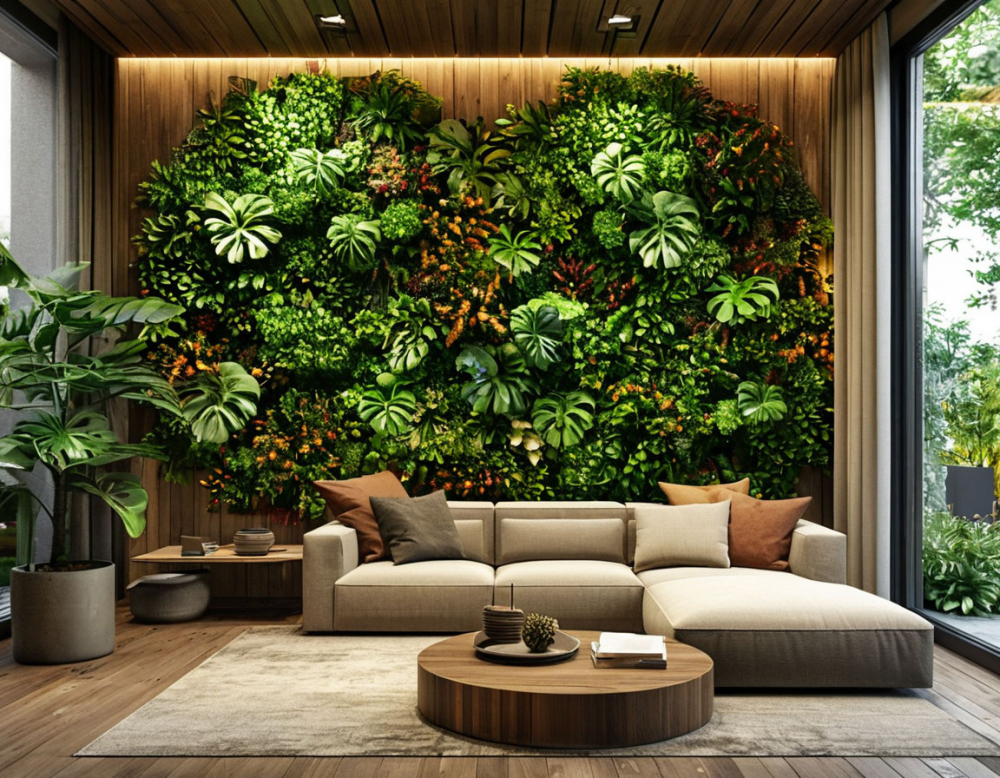
Photo: phytopa can make any shape
For vertical landscaping, shelves, crate, suspended pots and racks with flower pots are used. The structure is fixed to the floor, wall or ceiling. Plants can be located both in separate pots and one long. In this case, the frame takes up more space and looks more bulky than in the case of a phytomodule, but it costs cheaper.
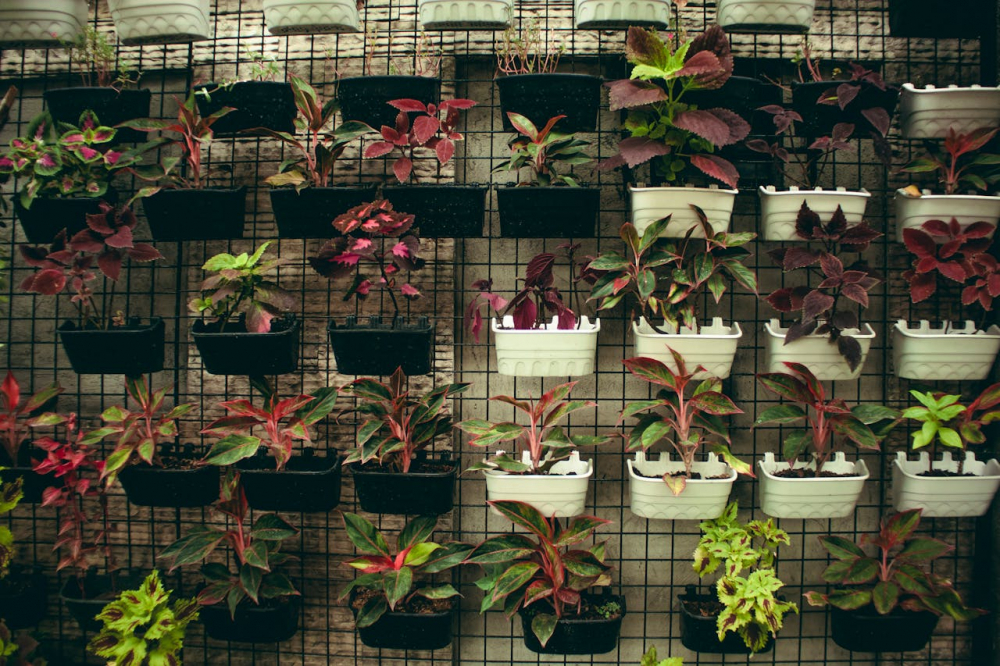
Photo: the grate allows you to have plants at different heights relative to each other
How to integrate vertical landscaping into the apartment
Vertical landscaping is actually suitable for any interior style. Living walls look especially interesting in IVF, modern, Scandinavian and loft styles. Greens can be used as a partition to highlight a certain wall or fill the empty space.
To highlight one wall, carpet landscaping is perfect. With it, you can decorate the wall in the living room or in the dining area. Also, such a wall can fit into the interior of a spacious bathroom or hallway. You can use both real plants and artificial ones, or choose a stabilized moss.
With the help of phytomoduli, you can make a partition of greenery or fill the empty space. This option is cheaper than carpet landscaping, but takes up more space.
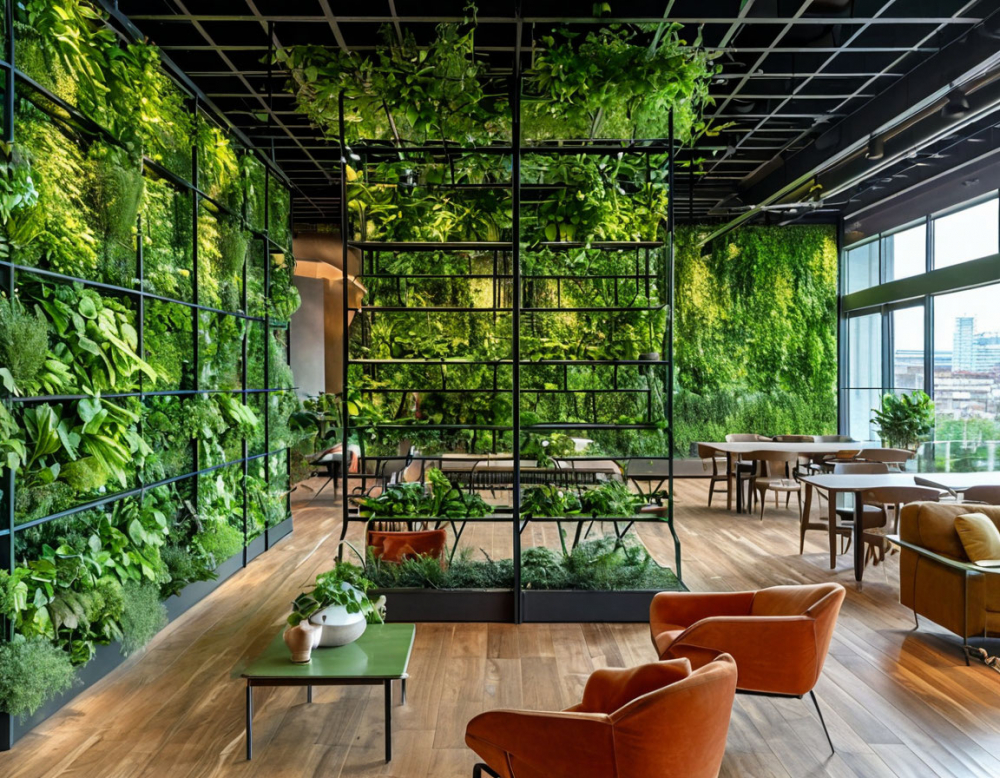
Photo: a partition of greenery divides the space into several zones
Fitopasus is used to decorate part of the wall in the living room, kitchen, hallway, bathroom or corridor.
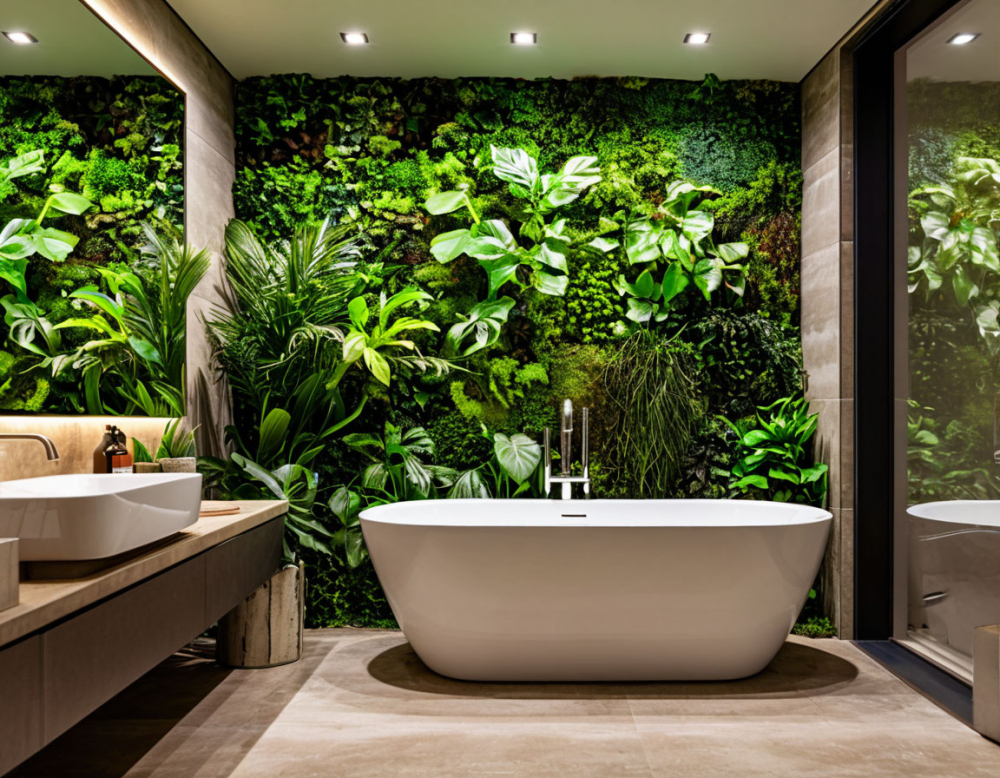
Photo: phytopanno can be entered even in the interior of the bathroom
More traditional racks with pots and pots are usually used in Scandinavian and eco interiors. With their help, space is divided or empty walls are decorated.
Conclusion
- Vertical landscaping serves as a unique decoration for space. It is used to revive the interior and add a place for relaxation to it.
- Vertical landscaping can be made of both living and artificial plants. Stabilized moss is also used.
- Living walls can be automatic watering. They can be left unattended for a long time, and the plants will not dry.
- In the interior of the apartment, it is most convenient to use phytopannia. These are small compositions of plants that can be compactly located on the wall in the hallway, living room, bathroom and other places.

