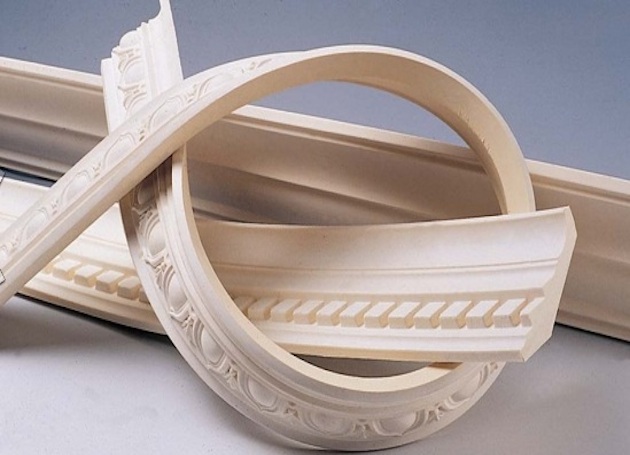
No matter how expensive renovations you undertake in your apartment, everything can be ruined by one small detail. If you have suspended ceilings, then an unsuccessfully selected plinth for a stretch ceiling will ruin the whole picture, because it is no less important a finishing element than the ceiling canvas itself. The ceiling plinth serves as the last final accent for the ceilings, its framing and completes the renovation work in the room, hiding minor imperfections.
But which skirting board to choose for the ceiling in a particular room? In order to make the right choice of such decor, you should study their diversity and learn all the intricacies of this matter.
Types of skirting boards for stretch ceilings
Today there are three main types of decorative skirting boards for suspended ceilings on the market:
- Foam baseboard. This is the most budget option for ceiling plinth. Accordingly, it has the most shortcomings. It is very fragile, brittle, as a result of which it is susceptible to damage during transportation and working with the baseboard. In addition, you need to be very careful when choosing glue for such a plinth, since not all samples are suitable for working with foam plastic.
- Polyurethane skirting. This plinth is more versatile in terms of installation. Polyurethane is a flexible and durable material, so this type of ceiling plinth can be used even on rounded and curved areas. It is compatible with any adhesives and looks presentable indoors. The disadvantages of polyurethane plinths for suspended ceilings include the high price and the possibility of installation only on the wall, and not on the ceiling, which is not always convenient.
- Plastic skirting board. Such a universal material as plastic has enriched the variety of ceiling skirting boards and significantly expanded their capabilities. Plastic plinth can imitate almost any finishing material – wood, tile, metal, as well as highly artistic stucco. Thanks to its excellent characteristics and reasonable price, plastic skirting boards are the undisputed favorite today.
- Other types of skirting boards. There are also rubber skirting boards for suspended ceilings, which are more often called decorative inserts. They are intended solely to fill the existing gap between the wall and the ceiling. Such stretch ceiling inserts are classified as flexible skirting boards; they can be colored and have a variety of widths.
Wooden ceiling plinths are rarely used with suspended ceilings. This is typical for particularly chic interiors designed in a classic style, where a carved wooden plinth will look harmonious. But it is worth remembering that wooden plinths are expensive, difficult to install and adjust, and quite heavy.
Which skirting board is better to choose for suspended ceilings? One that meets the following criteria:
- it is not heavy – since some models of ceiling plinths can sag and lose shape under their own weight;
- have a wide surface area adjacent to the wall structure – this will ensure reliable fixation of the plinth and its organic appearance;
- be flexible enough, but at the same time durable, which will allow it to be carefully cut and installed in all required places, even problematic or non-standard ones.
For better installation of ceiling plinths for stretch ceilings, we recommend using special adhesives. Select the texture, color and width of the plinth you need in order to fully appreciate its necessity and significance in a room with suspended ceilings.

|

|

|

|

|

|

|

|

|