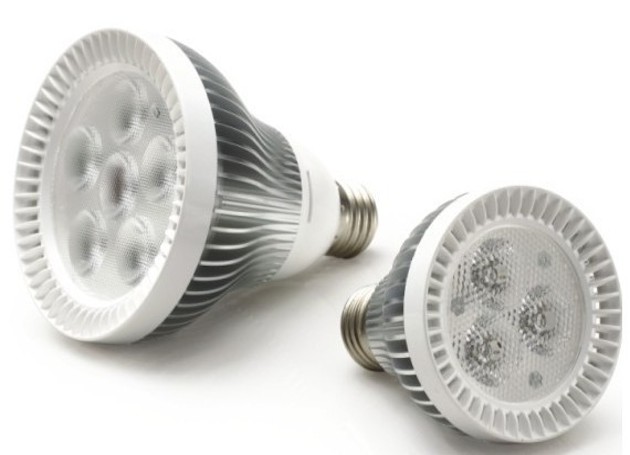
The issue of lighting your home is important both at the renovation stage and in everyday life. In addition to its enormous influence on the harmonious structure of the home, light directly affects our life and health. Therefore, you should not be conservative in this matter; you need to keep track of new products and keep up with the times.
Today, LED lamps for home lighting are becoming increasingly popular. There has been a lot of debate surrounding the feasibility and safety of their use. We suggest you figure out what they are and whether they are worth using for your home.
What are LEDs?
As the name suggests, LED bulbs use LEDs for lighting. These are semiconductors that produce optical radiation when electric current is passed through them. The LED emits light that lies in a narrow range of the spectrum; it immediately has a specific color. Therefore, by changing the chemical composition of semiconductors, it is possible to obtain different shades of lighting. Unlike a regular light bulb, where the color is formed thanks to various light filters.
How do LED lamps shine? Their light is more directional than other types of lamps, it can have different degrees of brightness and shades of the same color. For example, there is soft white light, and there is cool white light. You need to test several options for the color you need and choose the one that suits you best.
Thanks to many positive and some innovative characteristics, the use of LEDs in lamps for the home has become very popular.
Advantages of LED light bulbs for the home
Pay attention to the main positive characteristics of LED lamps for the home, thanks to which they are becoming increasingly popular.
- Real energy savings. According to numerous observations of scientists, it has been established that LED lamps consume energy 10 times less than the incandescent lamps we are used to and 3 times less than fluorescent light bulbs.
- Long service life. Most manufacturers indicate the service life of LED lamps from 3 to 5 years. But this depends on the quality of the LED crystals that are used in the production of lamps. There are cases that such lighting elements work for up to 10 years, and sometimes they do not “live up” to 2 years of high-quality work – first they lose their brightness and then go out prematurely.
- Relative harmlessness. These lamps do not contain mercury, phosphorus and other compounds harmful to humans, which are found in other light bulbs for the home. They are non-toxic and do not contain any substances harmful to the environment, so they are very easy to recycle. Although some manufacturers use some harmful metals in the construction of lamps, the negative impact of which on human health is also likely.
In addition, LED lamps, unlike fluorescent and incandescent lamps, do not create vibrations harmful to the human eye. Their light is pure and does not contain UV radiation, which causes vision impairment.
Negative aspects of LED lamps for the home
Despite the important arguments in favor of LED lamps, there are controversial issues that should be taken into account when using them at home.
The main disadvantage is the high price of such lamps. It is much higher than that of incandescent and fluorescent lamps, although the service life of LED lamps is longer.
Due to the fact that the glow of LED lamps is slightly different from what we are used to and more narrowly focused, you may need more lamps to create a comfortable environment at home.

|

|

|

|

|

|

|

|

|