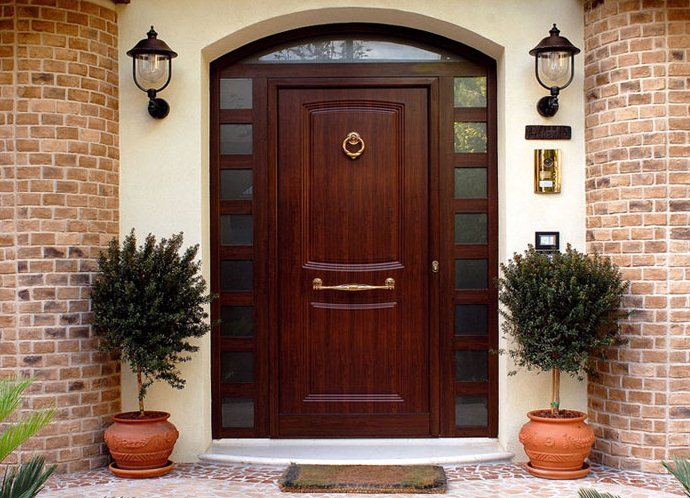
An ideal solution for those owners who want to equip their housing only by natural materials are the doors made of an array of wood. Since wooden door leafs can be used both at the entrance to the house and between the rooms, different requirements are presented to them.
Interior doors from array
The cost of interior doors made of wood is affected by the wood breed, the way of processing it, and the quality of accessories, as well as various additions, for example, double -glazed windows, etc. After all, you must agree, a beautiful door from an expensive tree will look ridiculous with cheap fittings.
The door leafs for use in the room can be made from a whole array, as well as from glued. The latter have a slightly lower price, since it is produced from several pieces of wood connected by glue under high pressure. But doors from glued boards have more moisture resistance compared to whole massifs.
 |
 |
 |
 |
 |
 |
 |
 |
 |
Array entrance doors
Wooden doors are the embodiment of an exquisite style and an excellent appearance. At the same time, the front doors from the wood array can be not only beautiful, but also reliable and safe. All these qualities are answered by oak products: they will serve as an excellent protection for the inhabitants of any home. In addition, such a door leaf will perfectly protect you from cold and street noise.
A chic wooden door can tell a lot about the inhabitants living in this house. She is evidence of the prestige, style and impeccable taste of the owners. High -quality processed and saturated with special compounds, such a door with proper care will serve for a very long time. At the same time, the tree looks very harmonious in combination with metal and glass.
A wooden canvas, decorated with skilled decorative carvings, looks beautiful. The decoration of the exterior of the house can be the front door made of an array of red wood. You can choose a door from an array of wood painted in white or any other desired color.
 |
 |
 |
 |
 |
 |
 |
 |
 |