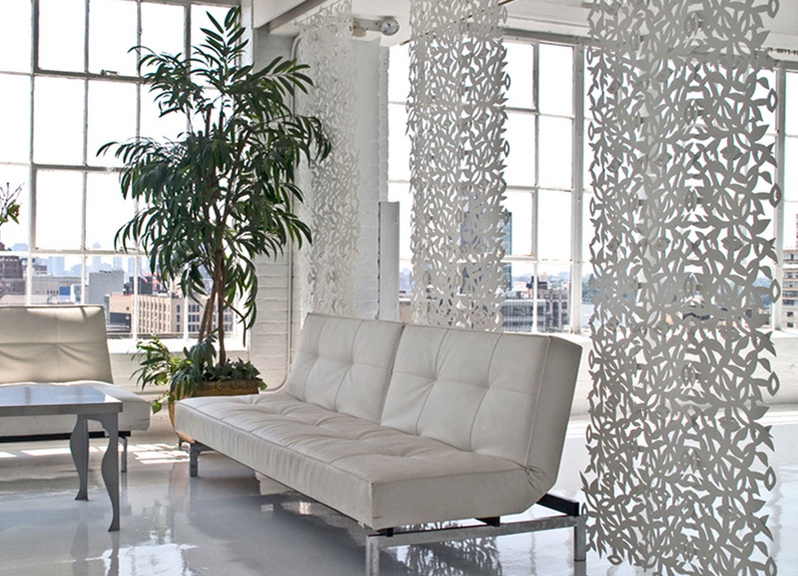
There are many ways to zoning space in any room, one of which is the use of decorative gratings in the interior. With their help, you can create a visual illusion of separation of space, and in combination with properly selected lighting, original drawings of light and shadow appear.
Advantages of decorative gratings
When using wooden openwork decorative gratings in the form of partitions, the room does not seem cramped, but, on the contrary, the interior looks airy and light. Decorative lattices are especially popular to divide into zones in a studio apartment. With the help of decorative wood grilles, you can separate a corner for eating, rest or sports. Such interior elements are easy to care for, are not afraid of the rays of the sun, and, covered with special means, are resistant to moisture.
An original and unusual one looks like a room with a game of chiaroscuro and a voluminous effect when installing decorative wood grills on the ceiling, walls or even in front of a mirror. Such a decoration will make the interior of the room complete and memorable.
In addition to zoning, decorative lattices are used as screens for heating radiators. The shape and color of such interior elements can be very different. The main thing is that the decor from the gratings looks harmonious against the background of the rest of the room. The stairs, bar racks, lamps, etc. are decorated with interior lattices. For these purposes, use products of metal, plastic, wood or MDF.
Decorative lattices will serve as an excellent decoration for any interior, from classics, baroque to modern urbanism and high-tek. They are used, in addition to residential premises, in clubs and bars, offices and shopping centers, hotels and sports facilities.
 |
 |
 |
 |
 |
 |
 |
 |
 |