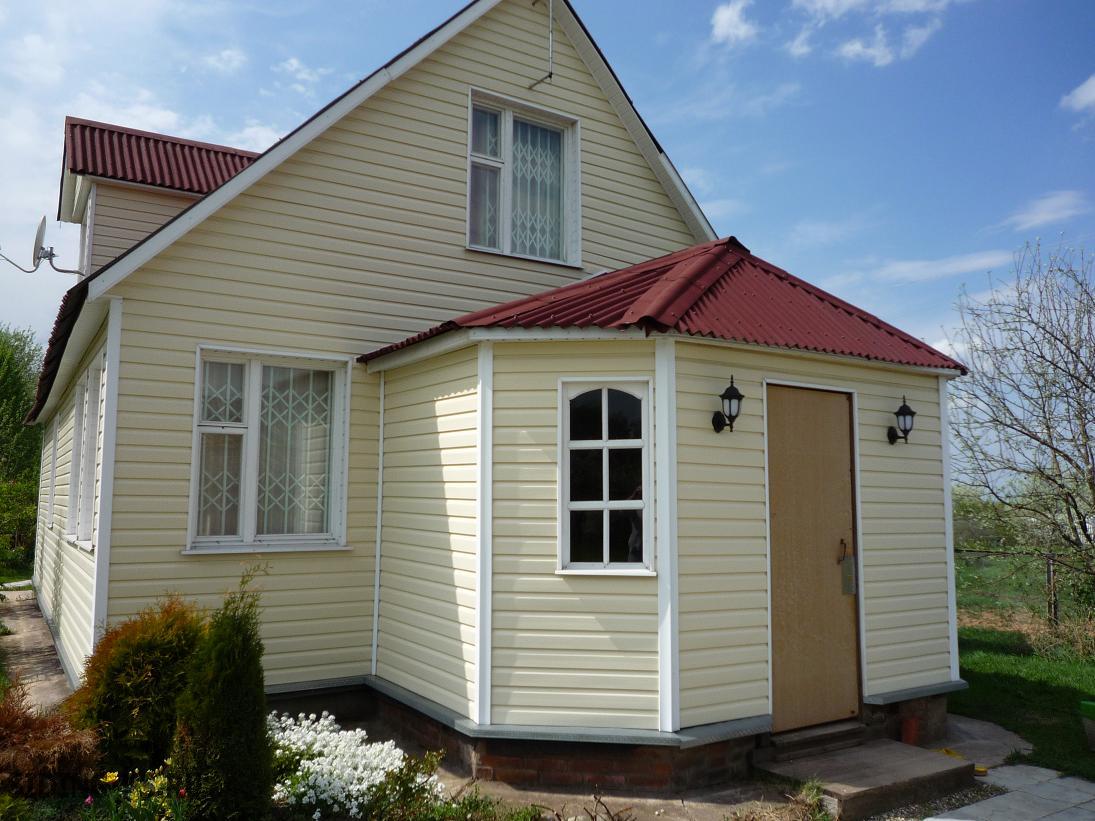
Naked brickwork or concrete wall in our time looks too boring and simple. Modern materials allow not only to give the structure a stylish look, but also to protect it from bad weather. Increasingly, the owners of the house strive to decorate it with stylish decorative plaster, using facing ceramic brick or facade panel.
External facing panels
- Wooden facing panels. Despite the victorious procession of polymers, there are always consumers who do not exchange wood for another, albeit cheaper, material. It “breathes”, holds heat well and promotes the formation of normal humidity in the room. The cheapest are panels of spruce, larch or pine trees. More valuable wood species are used for interior decoration. If desired, you can choose a different profile: in the form of a beam, lining, block house.
- Ceramic facing panels. There are several types of fastening of this material on the wall-on the frame, on clips-clipers, on self-tapping screws, using the solution directly on the wall. In any case, the installation of modern panels is a matter available to almost every person. The facade of the house is quite beautiful and, most importantly, durable, because facing basement panels from ceramics have excellent operational characteristics.
- Plastic decorative facade panels. Polyvinyl chloride is suitable for buildings that are built in a temperate climate and are not subjected to some significant loads. A convenient system of locking locks allows all the work on their own, so many people are installing these panels without involving specialists. Polymers provide reliable protection of the walls from the rain, they do not rot and are quite durable. Another advantage of this material is affordable prices. But there are some disadvantages that those who buy siding from polymers should know – a strong wind or hail are able to seriously damage such facades, in addition, plastic becomes fragile with quite serious frosts.
- Metal facade panels. This material is made of sheet aluminum or steel covered with polyester, plastisol or other protective layer. According to manufacturers, it serves at least 30 years without losing its properties. With regard to fire safety and water resistance, these panels show excellent results, but the heat -insulating properties of the metal, unfortunately, are low.
- Fibrim -cement faces for facades of houses. In addition to cement (up to 90%), the plates of these plates are mineral additives and various fibers of polymers or cellulose. Their weight is quite decent. Therefore, it is necessary to fix this material to the wall thoroughly. Usually, special Klyammers are used in the work, and if the thickness of the panel is small, then the screws. It looks great, both the facing panel for a brick and the material with a smooth texture, under the wild stone.

|

|

|

|

|

|

|

|

|

|

|

|

|

|

|
I also want to mention a fairly new type of material – facade decorative facing panels with insulation (polyurethane). Most often, the top layer is made of clinker tiles in them, and the heat -protective properties are provided by polyurethane foam. The most interesting are facing panels with insulation made under stone or brick. Their water absorption is low, this material serves about fifty years, while it does not rot, and does not lend itself to rust, like metal, or aging processes.
Natural materials become more expensive every year, it turns out that they are even somewhat more complicated in work than some quality substitutes. Therefore, in this note we specifically stopped on decorative facade panels. They have proven themselves in the construction business, and many people who are preparing in the near future should like serious repair work in the near future.