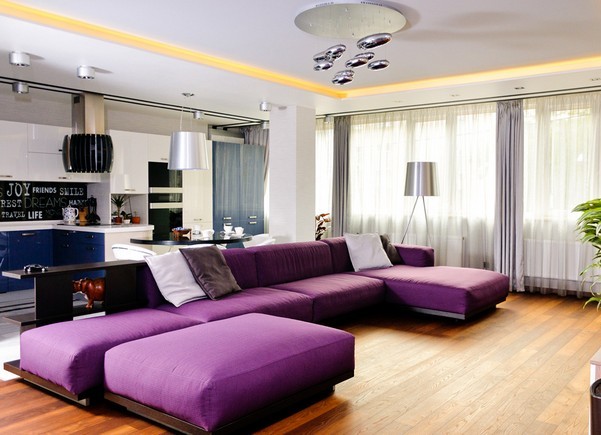
Recently, considering certain stylistic directions of the design of the apartment, many have stopped their choice on the “Studio apartment” option. The peculiarity of the interior design of the studio apartment is that the total area of the entire room is not divided by the walls into separate rooms, but only clearly limited functional zones are allocated-a recreation area, a dining room or living room, a sleeping area, a kitchen area, a working area.
Design of a one-room studio apartment
It should be noted that the design in the “Studio apartment” style can be considered optimal even for families with children, since the expansion of space due to the absence of any partitions provides more freedom to all family members. In addition, a large free space makes it possible to realize the most unusual ideas for interior design, to choose exactly the design that will create a unique atmosphere of comfort and comfort in your studio apartment.
Details of design of the studio apartment
As already mentioned above, certain life zones are clearly distinguished in studios apartments. For this, various design techniques are used – the design of a multi -level floor or ceiling; The finish of adjacent zones differing in texture or color scheme with a floor covering (for example, using a laminate with a pattern for different wood species or designing one of the zones, as a rule – this is a recreation area, carpet flooring). Separately, you should say about the design of the kitchen in the studio apartment. The very premises of the kitchen in the usual understanding in the studio apartment are not, this is also a certain zone in the common space. As a rule, this zone – the cooking zone – is separated from other functional zones with the help of a table – a bar counter (by the way, a favorite reception of many interiors designers, which does not prevent it from being quite effective and spectacular), but to limit the spread of odors, a powerful hood is mounted in the kitchen area.
When designing an interior, a very small studio room use such design techniques that will allow to visually expand the space as much as possible:
- Apply materials in white range for decoration;
- beat the reflective effect of glossy, glass and mirror surfaces of various interior items;
- When designing different functional zones, use different light sources.
Do not forget about natural light – large windows also “work” for visual expansion of space.

|

|

|

|

|

|

|

|

|